Greenbizz
Brussel 2023
Stacked urban manufacturing
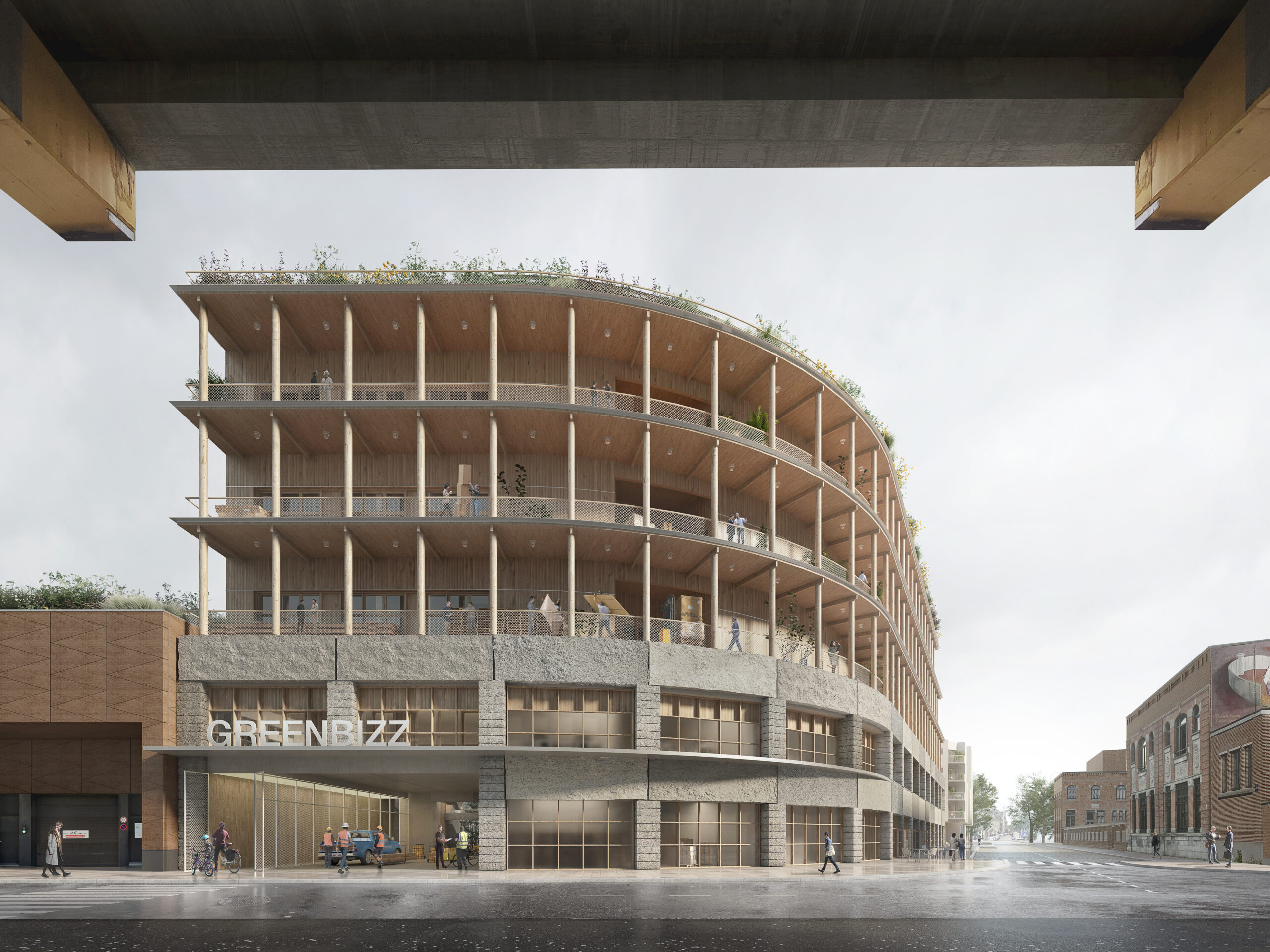
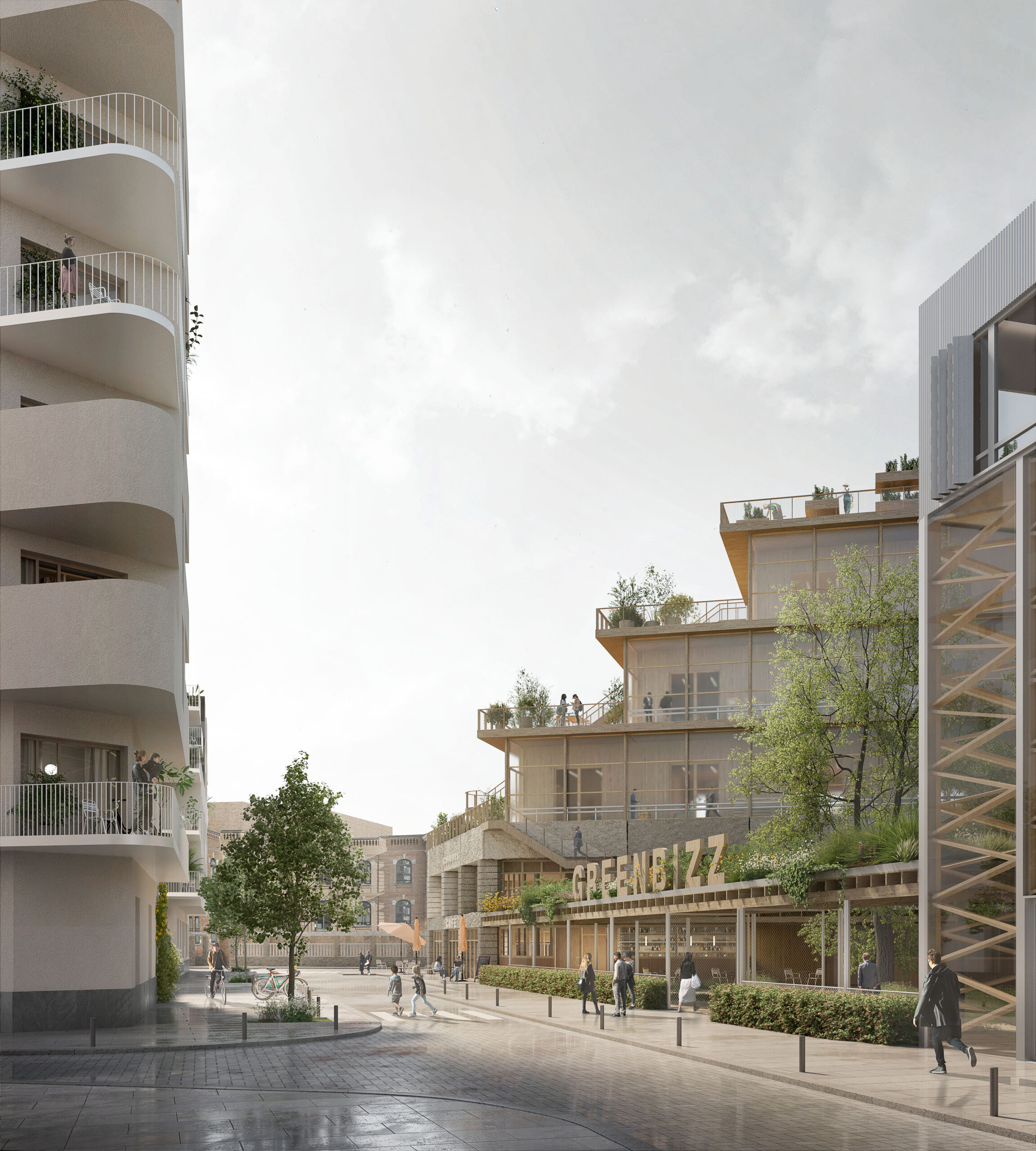
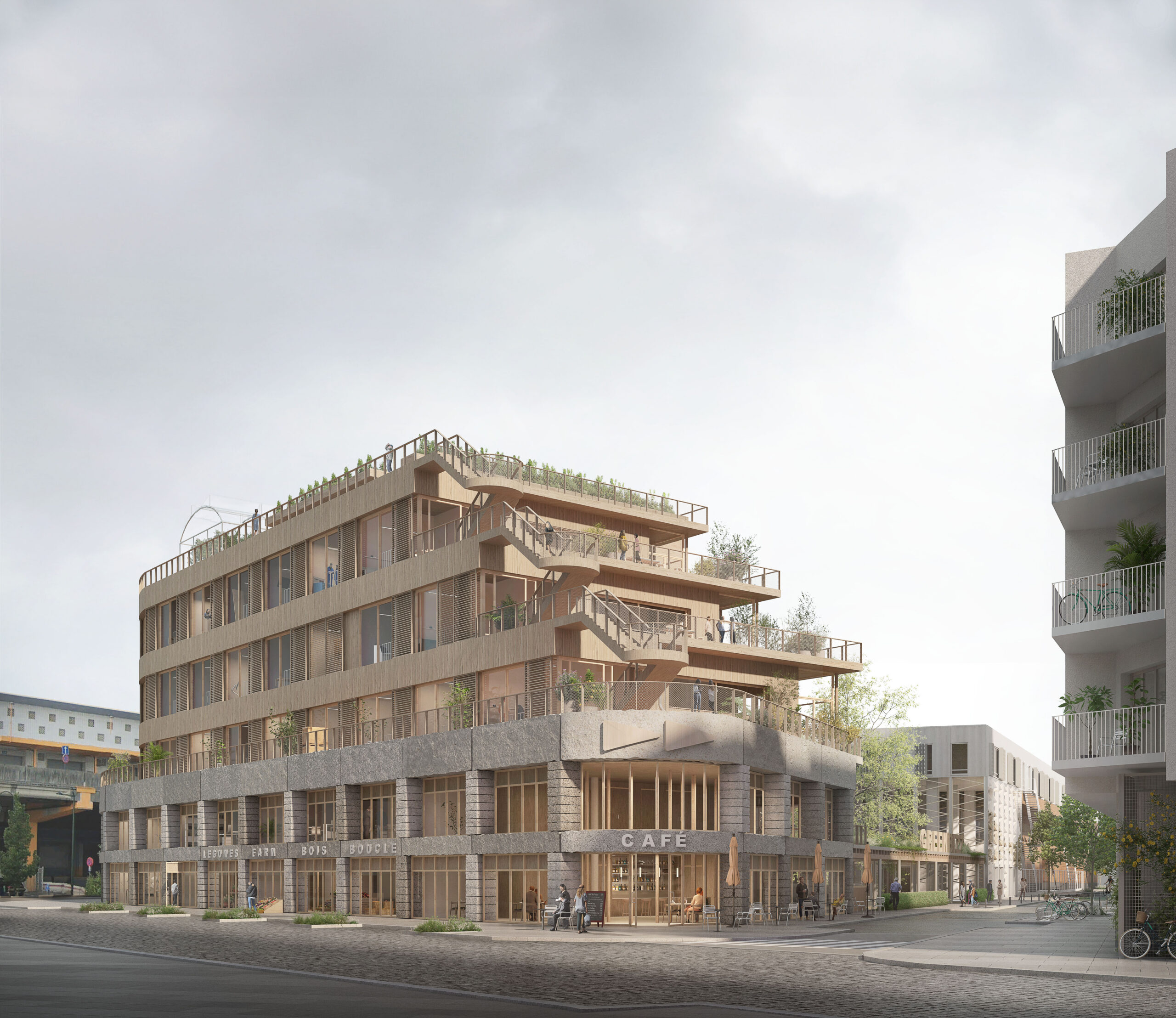
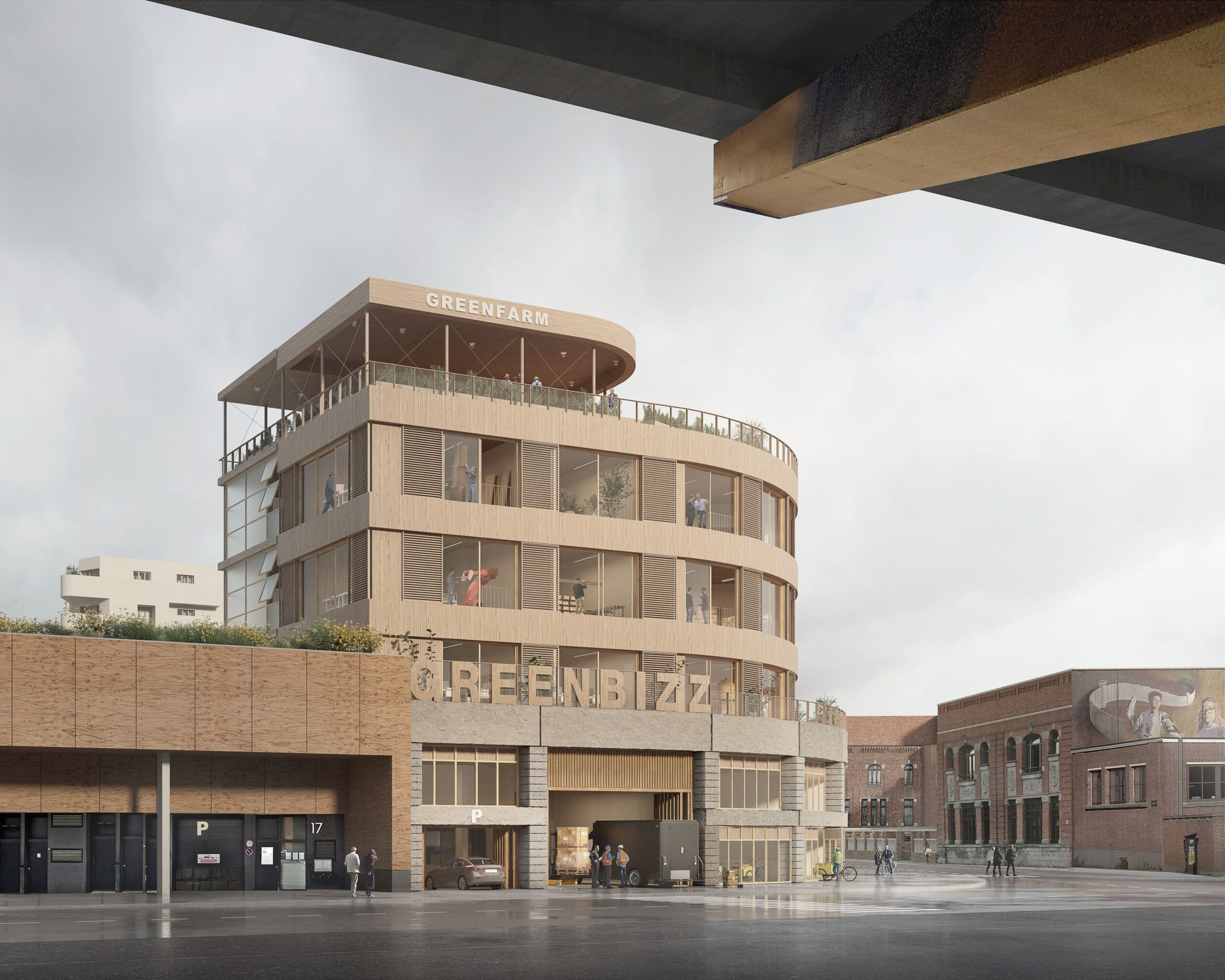
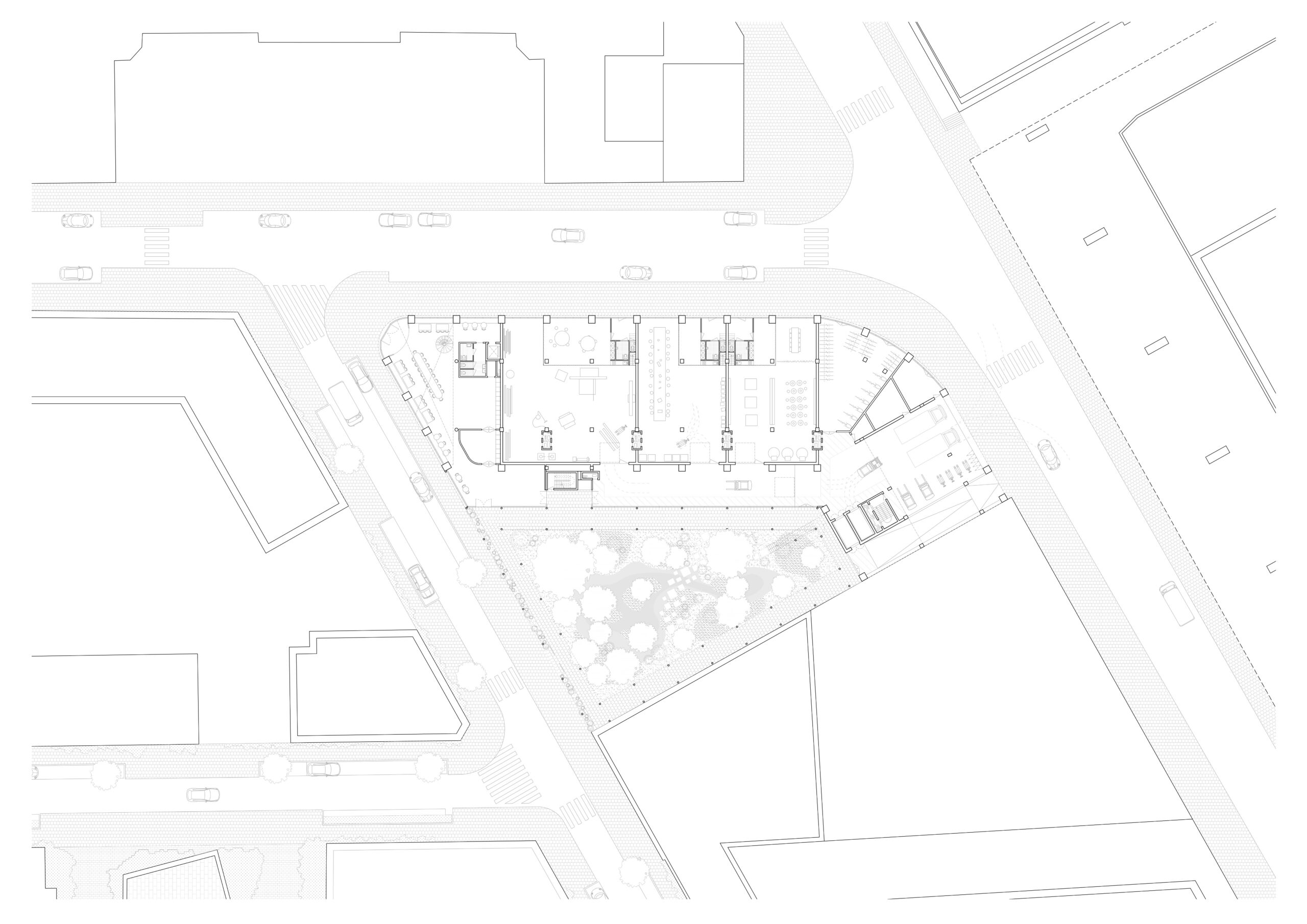
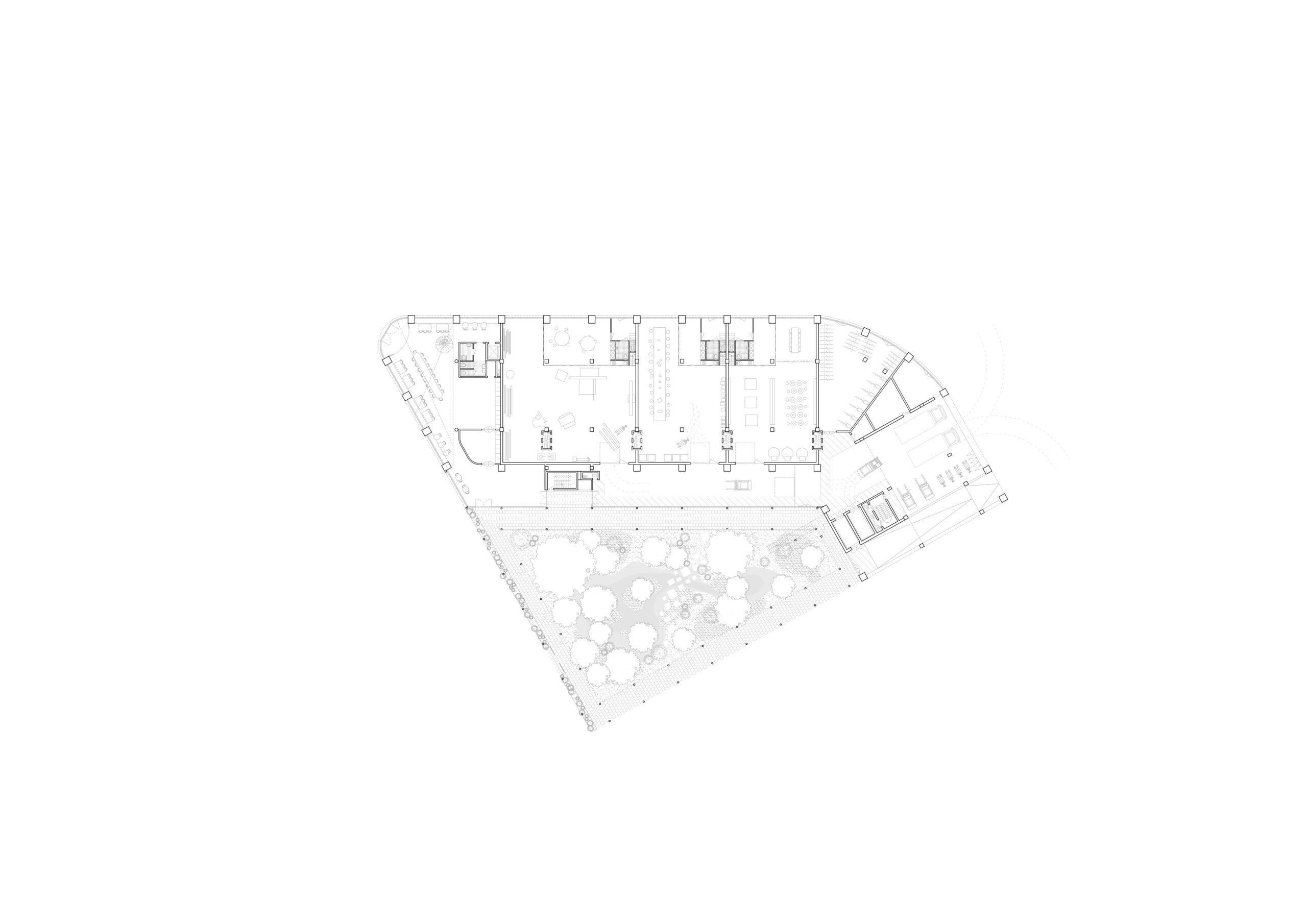
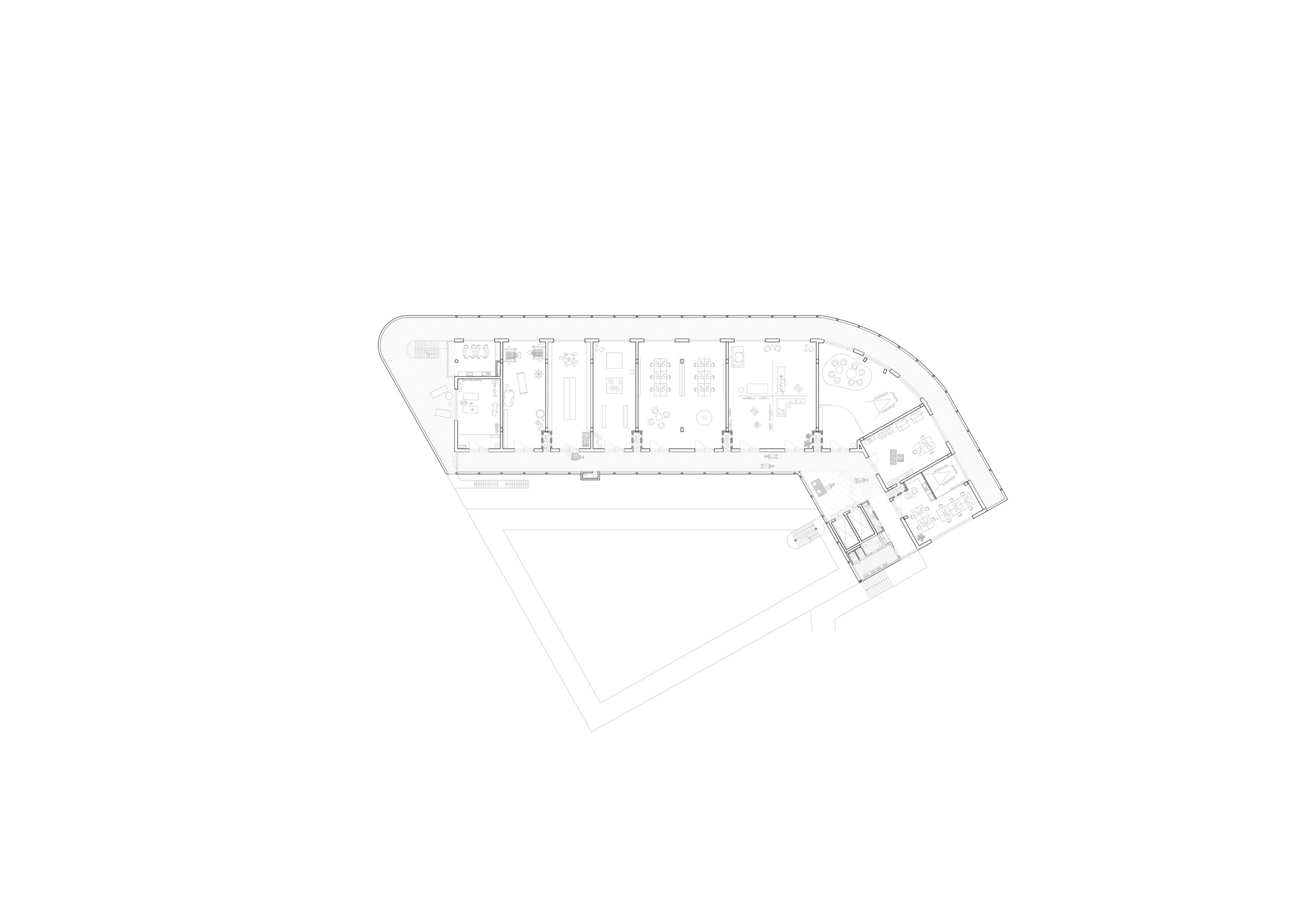
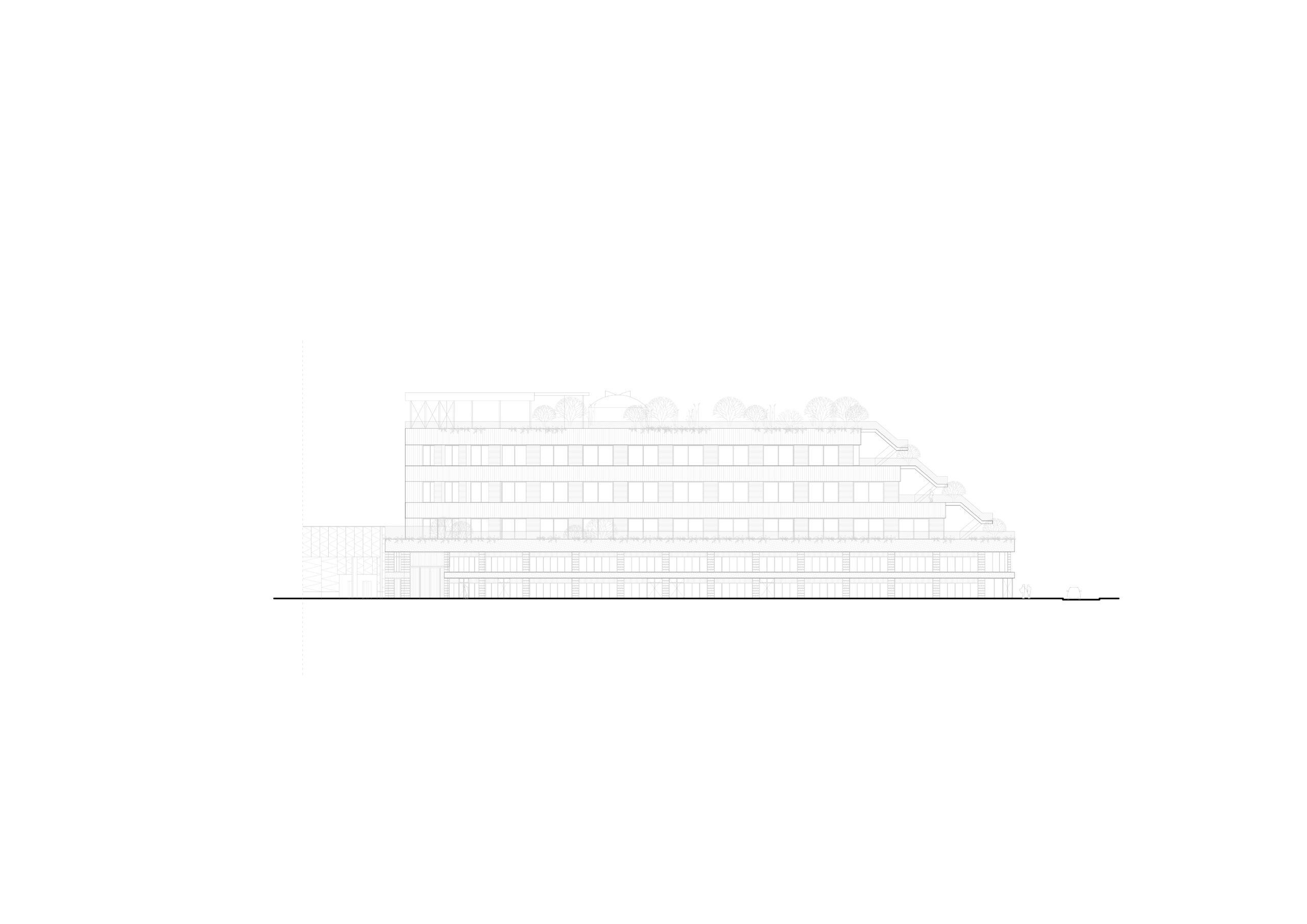
In the Brussels canal zone, on a challenging corner plot, the regional developer citydev.brussels is planning a large-scale programme of urban manufacturing. The maths is simple: the only way to reconcile the programme with the site is through stacking. Furthermore, the building will feature an underground car park and must be capable of being converted in the future into a residential building offering a variety of housing types. The functional, structural and building services challenges are therefore considerable.
read more
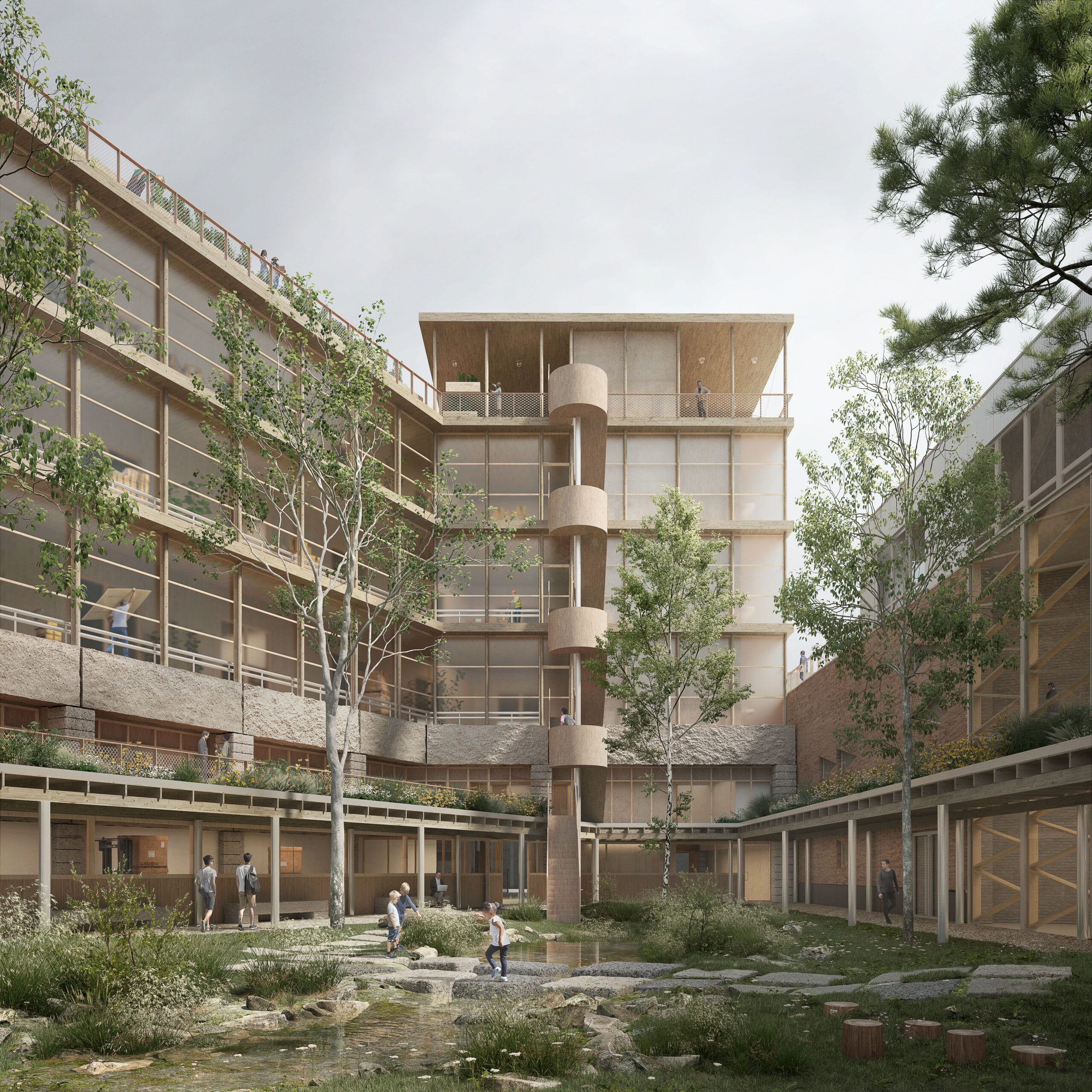
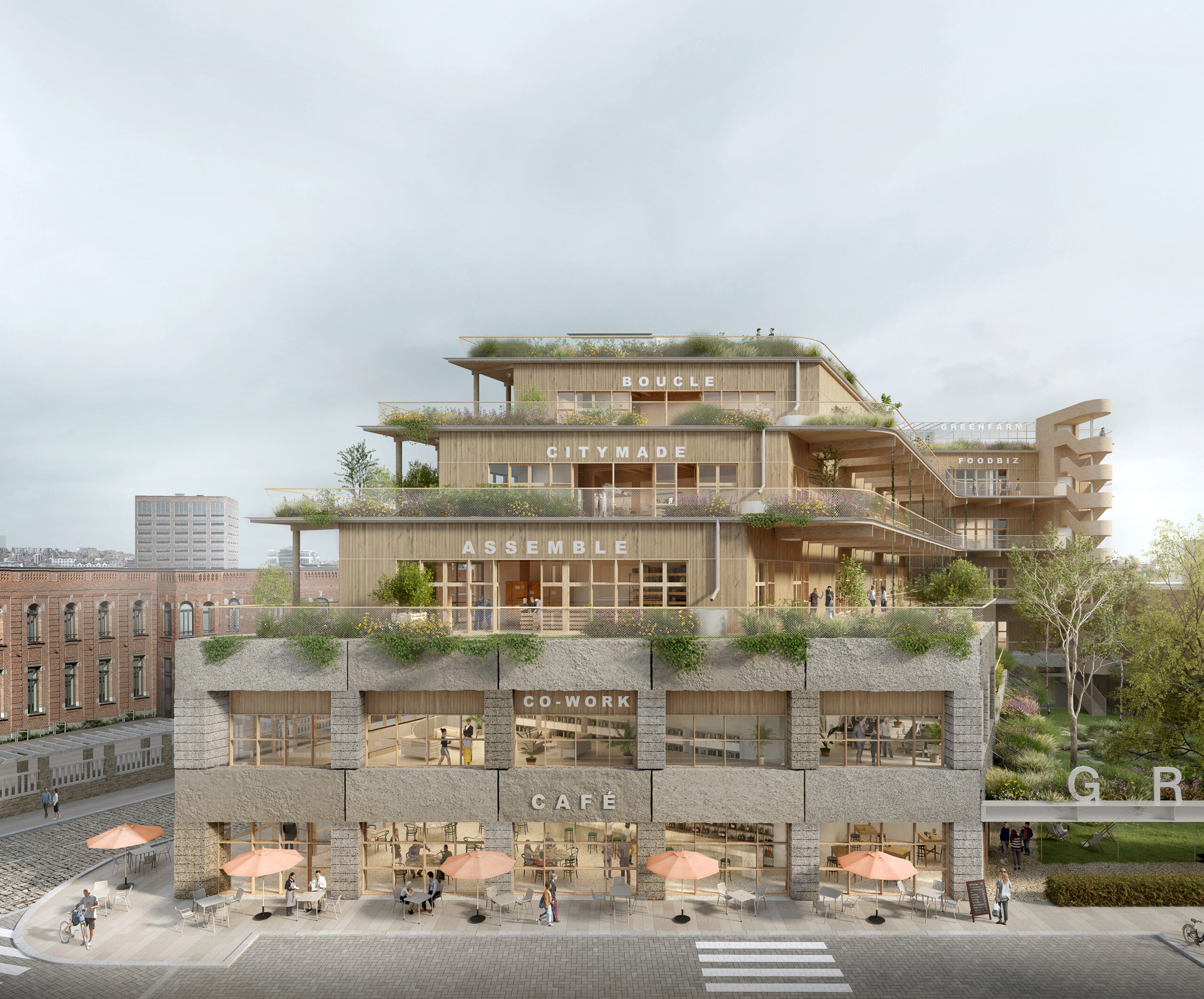
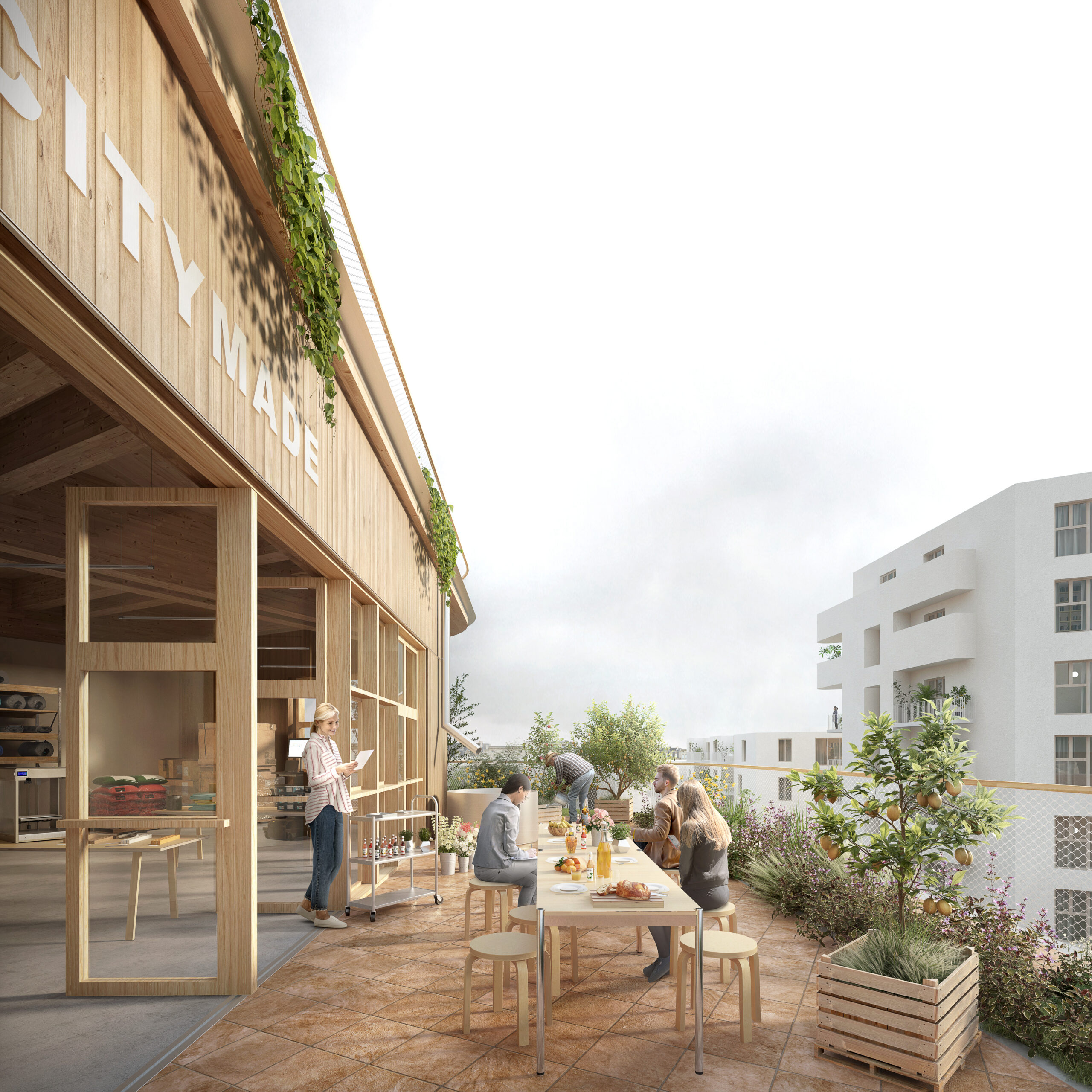
To untangle this knot, ATAMA proposes starting by creating a large garden. This offers the best guarantee of quality in both working and living. Along the garden, in the curve of the site, the commercial units and homes are stacked. From an urban planning perspective, this works well. The building creates a high-quality corner in the city and maintains maximum distance from the existing residential area. Amidst the urbanised context, the garden is a cool, hidden oasis. The logistical movements, on the ground floor and upper floors, were simulated in detail, with the structure and MEP organised logically.
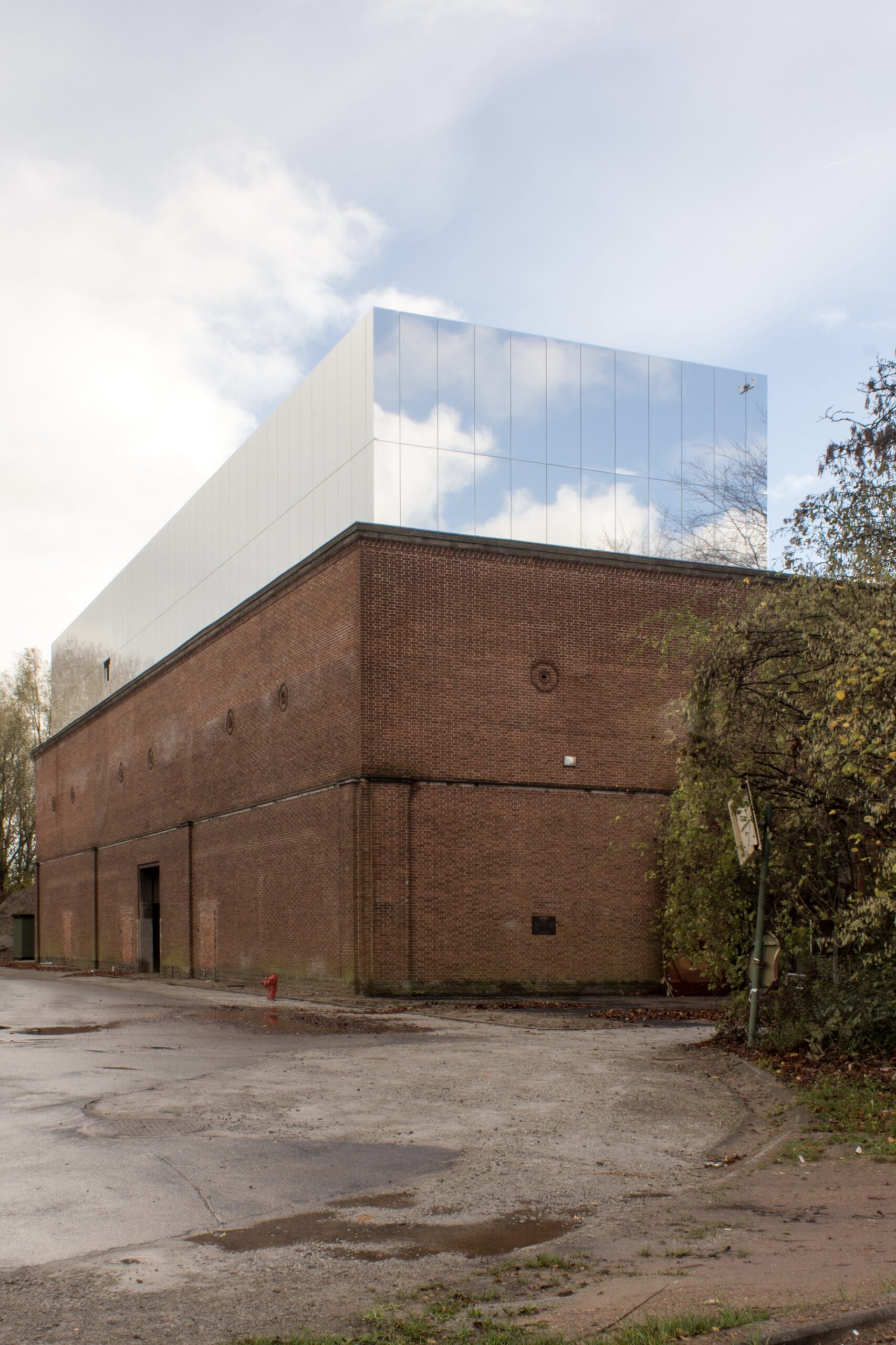
Constructed from reused materials or demountable elements, the project achieves an exceptionally high circularity score. An industrial ruin serving as a housing reserve or materials bank for the city.
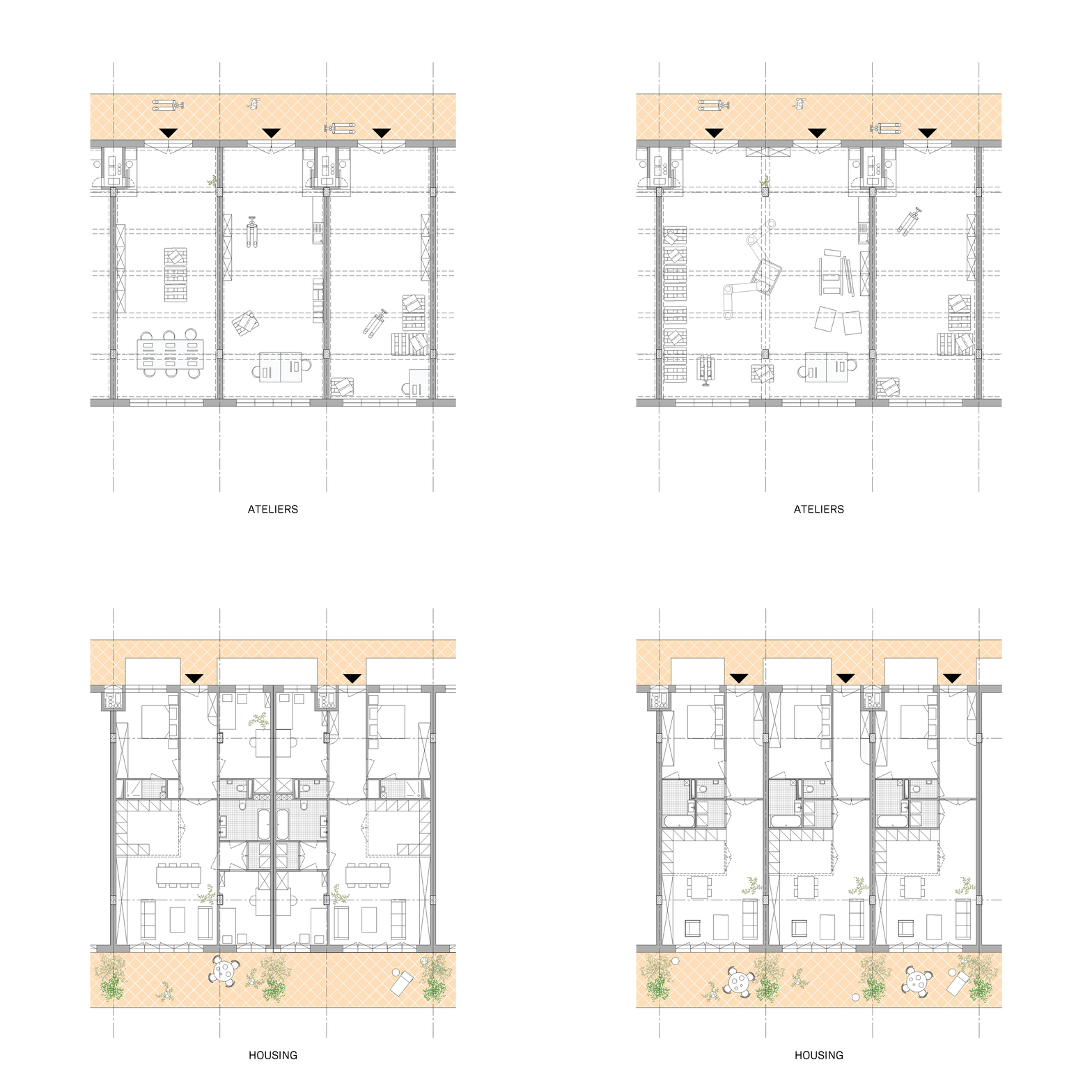
A business now, A house later
A business now, A house later
Over time, industrial buildings have proven that they can be successfully repurposed to accommodate other uses. ‘Lofts’ are a good example. This is no longer the case for many contemporary commercial buildings, which are little more than blank boxes in out-of-the-way locations.
However, if we bring manufacturing back into the city, opportunities arise. Moreover, if we start to stack industrial functions, a critical density is created that allows us to think even further ahead – towards a residential second life – should the businesses cease their activities.
The project is the result of a thorough analysis of how urban, industrial spaces can be easily transformed into high-quality housing.




In collaboration with
Bureau Bouwtechniek
Consultants
SWECO, ORO
Location
Brussel
Client
citydev.brussels
Type
Competition
Program
Ateliers and housing
Timing
2023
Surface
8375 m2

13.03.2026
Project update
Erasmus Hogeschool RITCS in Brussels has been completed. The new film and theater studio opened its doors in September 2025. Image by Stijn Bollaert.

Kalverwei Slachthuissite
Kalverstraat, 2060 Antwerp,
Residential
Balenmagazijn
UCO-site, Ghent, 2021 - 2023
Culture
Workplace

15.04.2026
Project update
Ongoing transformation at Arlon 53 in Brussels
