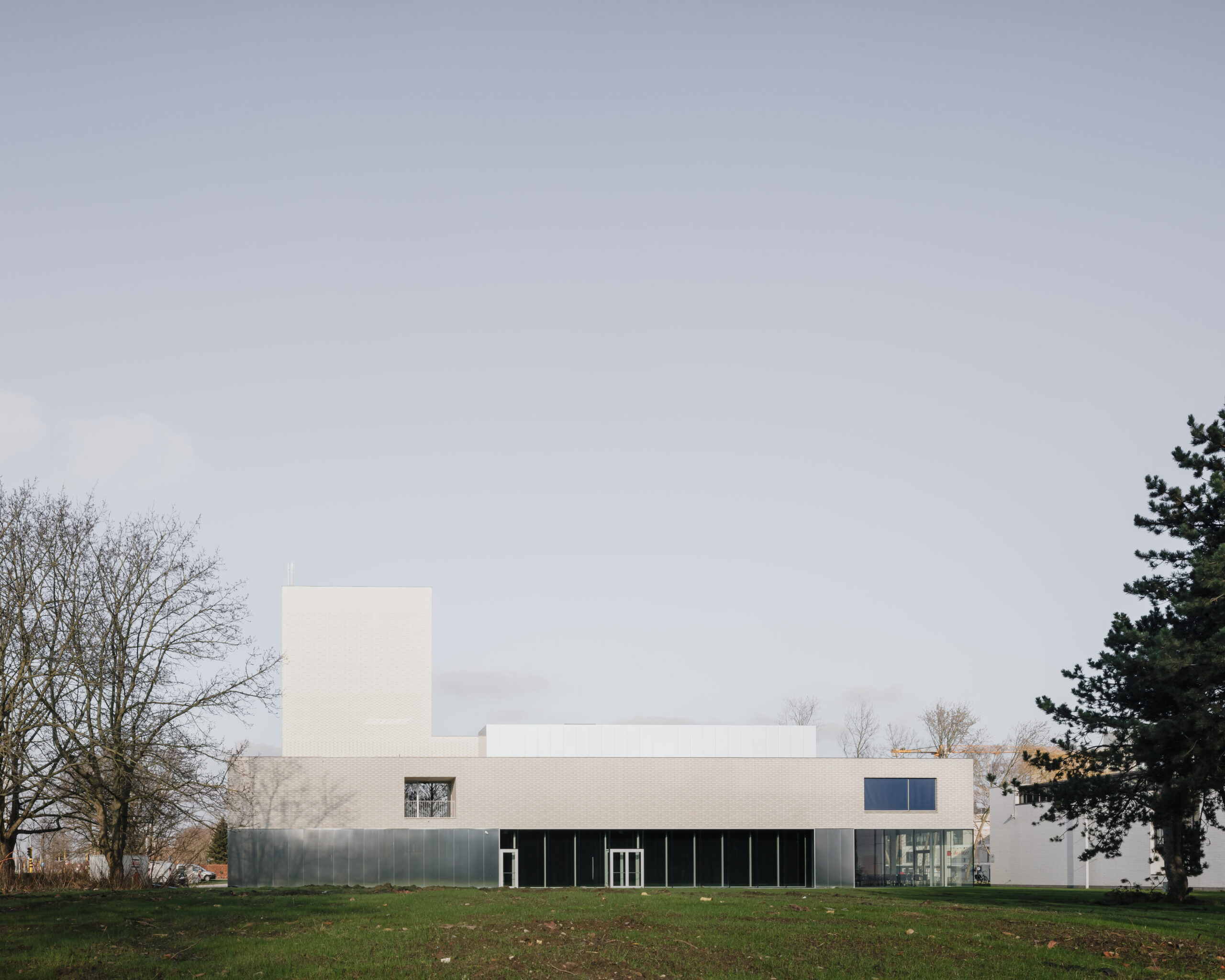
The Felix
Braemkasteelstraat, Gentbrugge 2019 - 2025
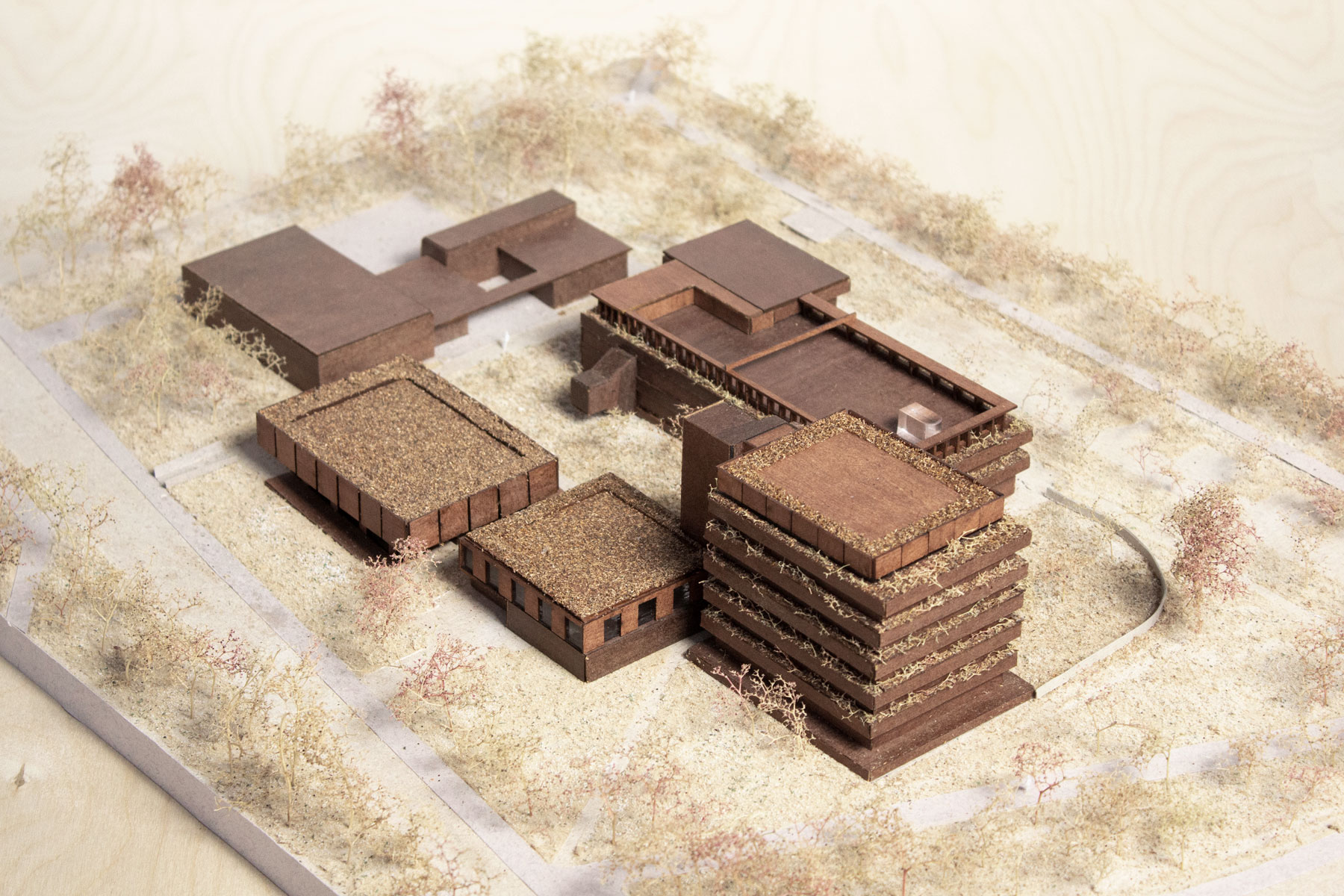
The Service Center Gentbrugge, designed by Paul Felix and situated on the edge of the Gentbrugse Meersen, consists of three buildings that are meticulously linked in a composition that gives each building autonomy while also allowing them to interact with the space created between them.
read more
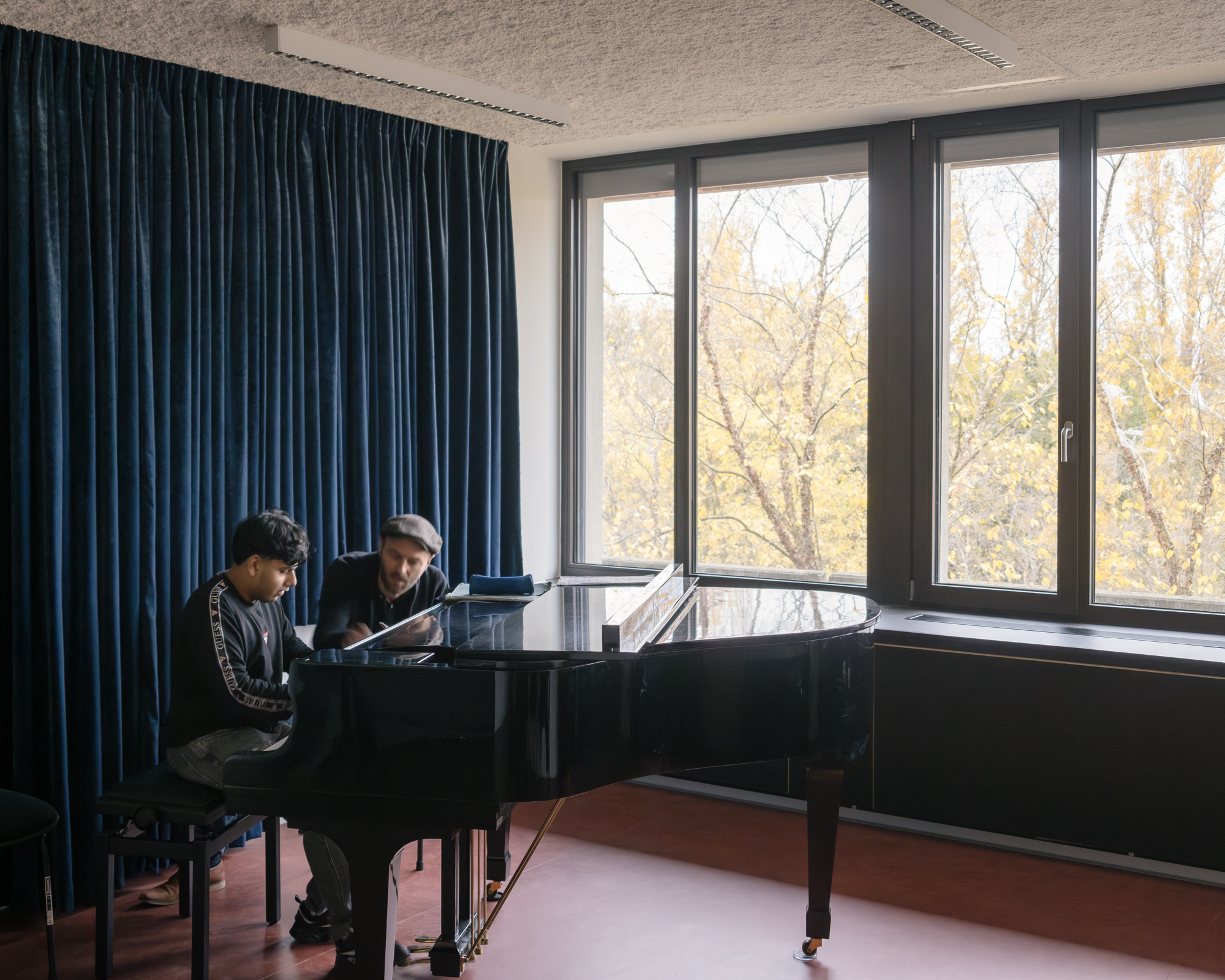
The transformation proposes interventions that transform the character of the site from an administrative building to an urban building where encounters between different users are the focal point. Each building is crowned with an extension - a dance hall, office space, and rooftop playground. Inside the building, all parts of the program are given an address to a public circulation space. The library serves as the pivot of the ground floor and is surrounded by open service counters that facilitate interaction between different users. A fourth building, the performance hall, is added to complete the composition, enclosing a courtyard along with the adjacent buildings.
New concrete facade elements are arranged in a rhythm that aligns with the existing building's cadence. The slender panels curve according to a tectonic logic that embodies the new construction phase. The design puts radical trust in the accommodating and generous spaciousness that the buildings offer, and extends it into a new ensemble.
...and the police meets the arts.
Concrete buildings from the 1970s are often dismissed as gray, dreary structures, to be demolished as soon as possible. Lightweight extensions in wood, steel, and glass frequently amplify this perception further. The design for De Felix—a multifunctional cluster that welcomes schoolchildren, users of the academy, the library, the police, and city administration—consciously chooses to ‘build on’ its concrete past. The concrete is not ‘cleaned up,’ but rather its weathering is embraced.
By viewing the various hues of the concrete, the varied surface treatments and the many forms that the structure takes on as a rich set of tools, we can reverse the negative perception. Variations of the concrete columns, façade panels, and beams are thoughtfully added. The old and new are unmistakably related. The new elements revisit the rhythm of the existing structures while introducing softer edges and lines. The buildings are topped up and extended, as if the original design is being further developed. A new theater hall, featuring a load-bearing concrete façade, is seamlessly woven into the site.
The transformation follows a strong circular approach, preserving and reusing as much of the existing as possible. The result is a building that not only respects the value of the original architecture, but is also prepared for the needs of the future.




Consultants
UTIL, Boydens studiebureau, Daidalos, Cluster
Location
Braemkasteelstraat, Gentbrugge
Client
The City of Ghent
Type
Competition
Program
Academy of the arts, primary school, vivil affairs department, police station, library& cafetaria
Timing
2019 - 2025
Surface
5.674 m2
Budget
€ 14.730.000 excl. VAT
Status
Completed
Photography
Stijn Bollaert
'An eye-opener is ATAMA's approach to the service centre that Paul Felix conceived for Gentbrugge in the 1970s. Concrete, concrete, concrete...it seemed a hopeless proposition to turn it into a new community centre with a library, a theatre hall, a police station, a school and an administrative hub. But ATAMA showed that preservation and even further expansion with an additional concrete structure with exoskeleton was feasible and more sustainable than demolition and rebuilding.'
Pieter T'Jonck in A+ 295 April-May 2022.
23.01.2026
Project update
The Felix in Ghent was completed. The cluster comprising an academy, school, library, police hub, city administration and culture hall officially opened its doors in October 2025. Image by Stijn Bollaert.
Ghent Waste Brick
Jan Breydelstraat, Gent, 2019 - 2023
Culture

Harbour Building Antwerp
Wilmarsdonksteenweg, Antwerp, 2021 - 2023
Industrial
Workplace